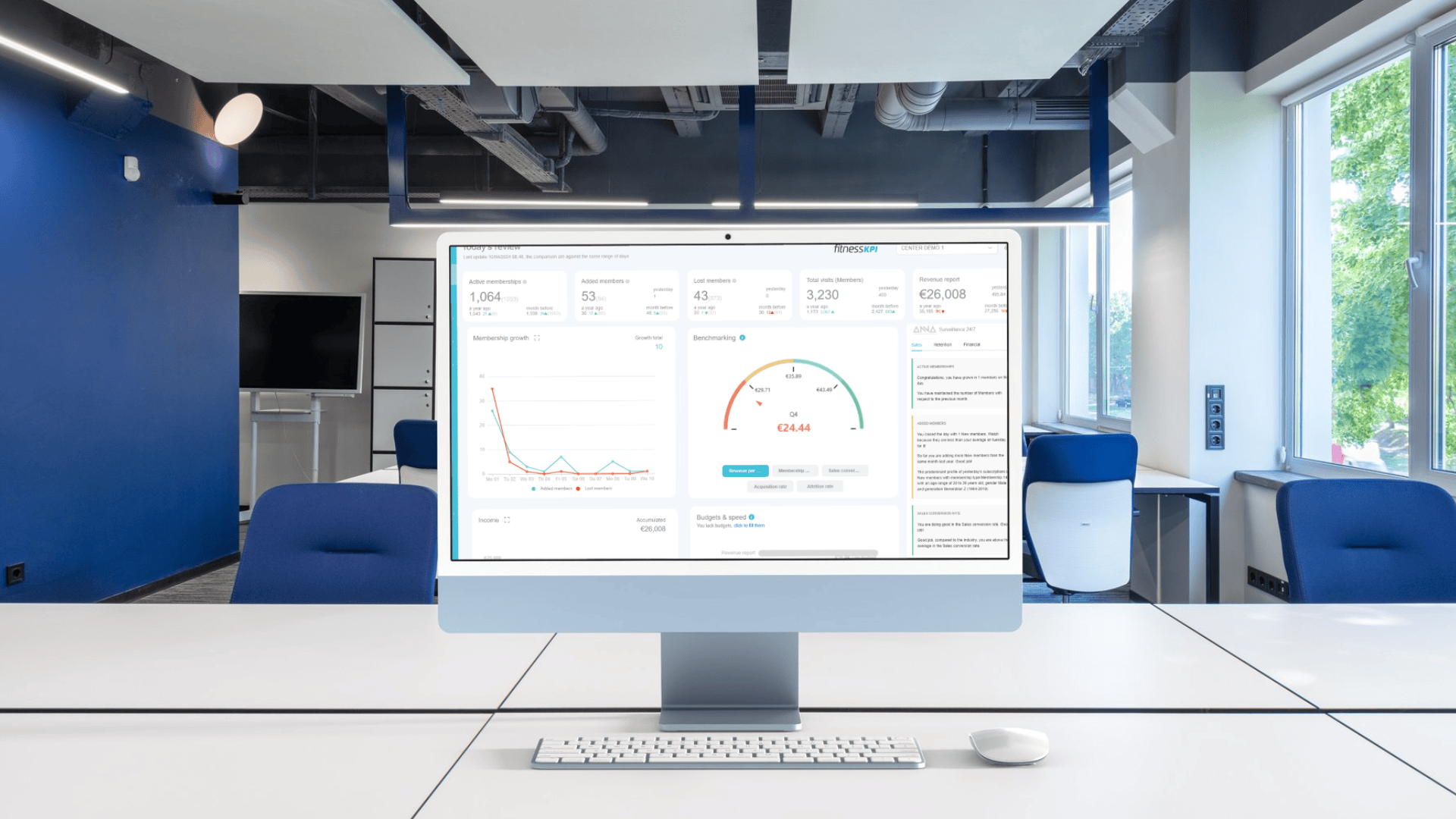
a clear and comprehensive view of your gym. This way, you can identify patterns, trends, and opportunities for improvement to take your business to the next level.
Imagine having access to a platform that brings together all the information about your gym in one place. From membership data and cancellations to facility usage and customer satisfaction, everything is at your fingertips. With FitnessKPI, you can visualise this data intuitively and make strategic decisions based on accurate, up-to-date information.
LMS (leisure management systems): A system that helps you manage the club's operations, from handling new memberships to controlling access and processing payments or selling services. An ERP is the operational tool of your gym. For instance, if you need to register a new member under a specific plan or limit their access to certain areas of the club, the ERP enables you to do so.
CRM (Customer Relationship Management): This is the platform for managing your relationships with customers. A CRM allows you to communicate with customers more personally, thus improving the service. For example, if a new customer has been with the club for a month, the CRM can send them a congratulatory message or a special offer to try a new service. At FitnessKPI, we offer a powerful CRM fully integrated with our BI.
BI (Business Intelligence): BI is the brain that assists in management. It automatically gathers data from the ERP, CRM, and any other relevant sources, analyses it through Artificial Intelligence, and presents the information clearly and usefully. FitnessKPI updates the data daily, transforming it into strategic decisions. For example, you might discover that some new members have had very few visits in their first 30 days and contact them to personalise their onboarding process, increasing retention.
With a BI, you don't just get data; you get clear actions to improve your gym. Identify issues before they lead to cancellations and enhance your customers' experience. The result? A 40% increase in retention. For example, by identifying that many customers leave within the first three months, you can implement more effective welcome and follow-up programmes to ensure they feel supported from day one.
A BI in the fitness sector isn't just a technological tool; it's a strategic ally that provides you with the insight needed to make informed decisions. By integrating data from different sources and presenting it clearly and actionably, a BI allows you to anticipate problems, optimise resources, and create an environment where your customers feel valued.
Implementing a BI in your gym is an investment, not a cost, as the benefits far outweigh the initial expenses. It will not only help you increase retention, acquisition, and customer satisfaction but also improve operational efficiency and profitability.
Don't miss this opportunity to take your club to the next level. Learn more about how a BI can transform your gym on our website. With the right tools and strategies, you can turn data into success and ensure that your gym not only survives but thrives in a competitive market.


